An AI-native workspace that puts GitHub, Google Calendar and Jira behind a single conversational interface, so you can plan, track and ship without switching tabs. Ask in plain English; Khove routes the request, pulls context across every tool, and takes the action.
An engineer's day is spread across a repo, a calendar and a tracker, and the answer to "what needs my attention" exists in none of them alone. It exists in the overlap, which a human has to assemble by hand, every morning.
Khove collapses that. It reads across GitHub, Google Calendar and Jira, answers in one place, and then acts: opening issues, creating tasks, blocking time. The distinction matters: most tools stop at the summary. Khove is built so the answer comes with the action attached.
It's an agent product, not a chat wrapper. Every request maps to a real, workspace-scoped tool call, and the hard engineering sits in permissioning, memory, and knowing which model to spend on.
Five surfaces, each solving a different part of the same problem: the answer to “what needs my attention” lives in the overlap between three tools, and nobody's job is assembling it.
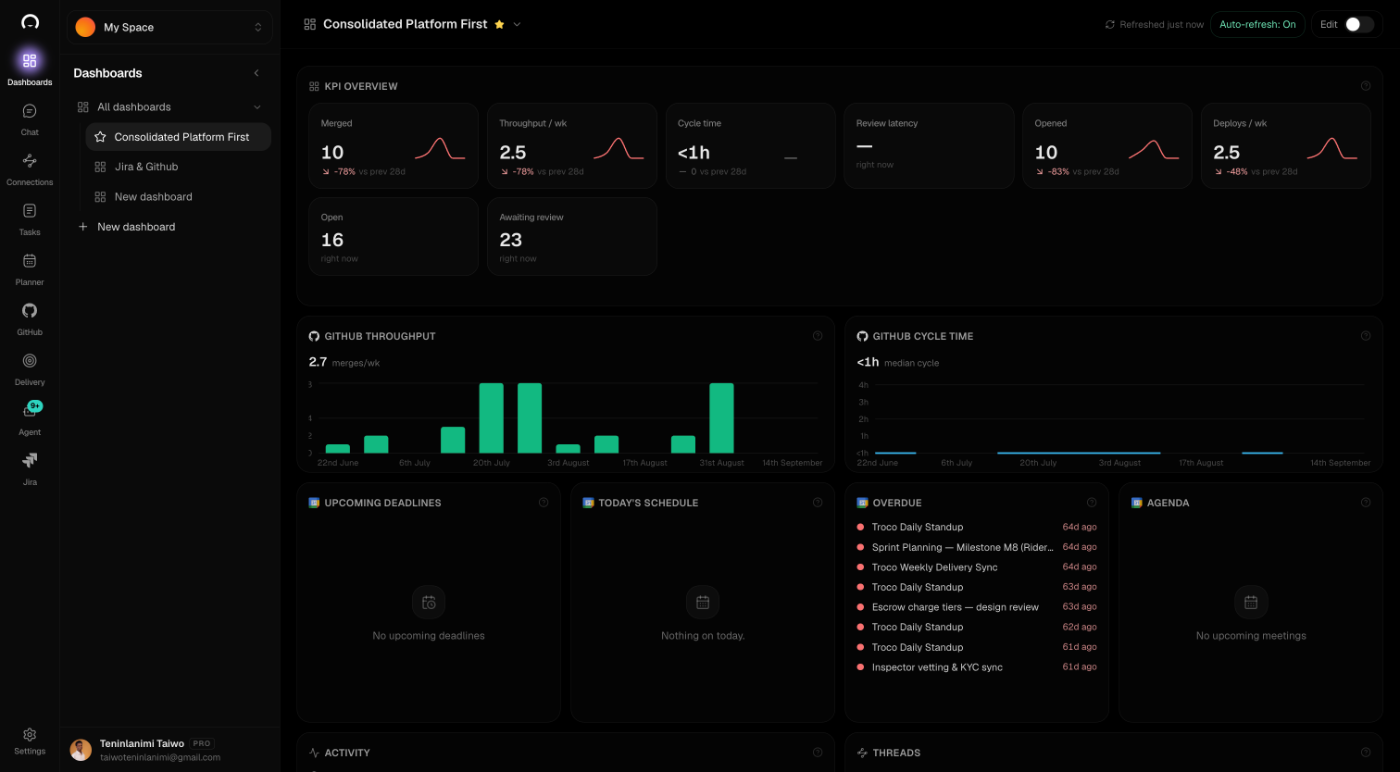
A single dashboard, “Consolidated Platform First”, carrying merges, weekly throughput, cycle time, review latency, open PRs and deploys from GitHub, next to upcoming deadlines, today's schedule and overdue items from Google Calendar.
Every tile shows a delta against the previous 28 days, so the dashboard reports direction, not just state. Auto-refresh is on; dashboards are user-composable, and this one is starred as the default.
Why it matters: the overdue column, eight ceremonies and reviews 61–64 days stale, is exactly the signal that no single tool surfaces on its own.
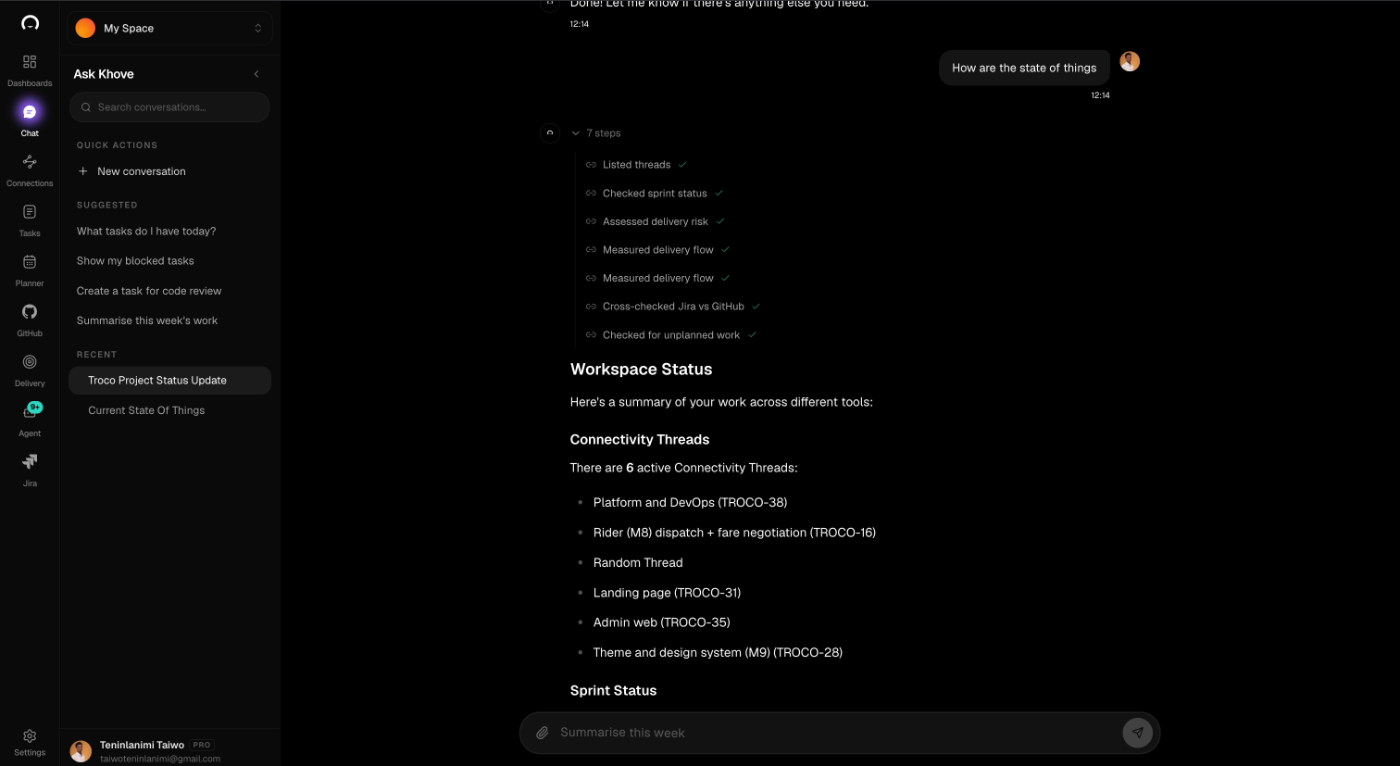
Asked “How are the state of things”, Khove expands seven traced steps: listed threads, checked sprint status, assessed delivery risk, measured delivery flow, cross-checked Jira against GitHub, checked for unplanned work. Then it writes a Workspace Status summarising six active connectivity threads and sprint state.
Each step is a real, permissioned tool call, not a rendering of one model response.
Why it matters: an agent with write access to production systems has to be auditable. Exposing the call trace is a trust decision, not a UI flourish.
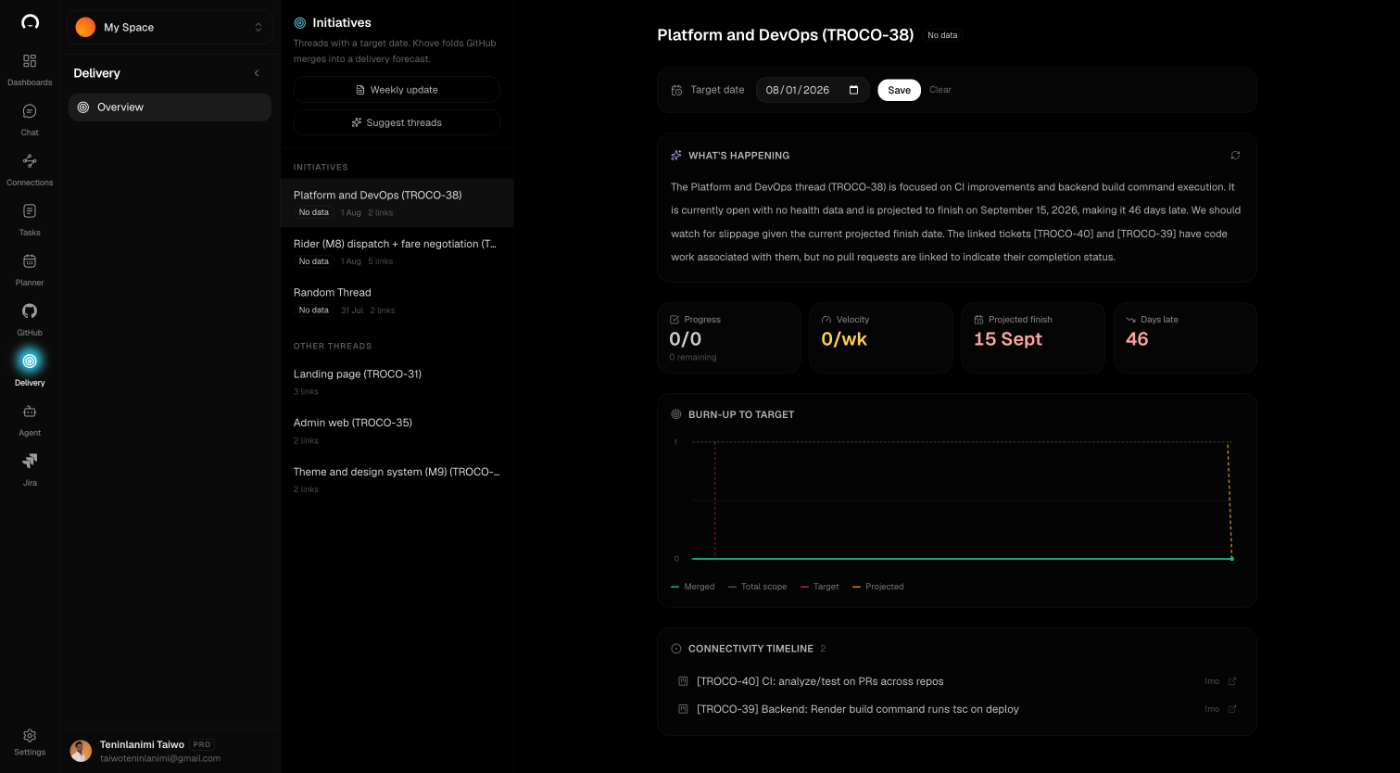
Threads with a target date become initiatives. Khove folds GitHub merges into a burn-up against that target and derives progress, velocity, projected finish and days late. Here, a platform thread is projected to land 46 days late.
The “What's happening” panel writes the narrative in prose and names the evidence: two linked tickets with code work but no pull requests attached, which is why it can't confirm completion.
Why it matters: status tools tell you where you are. This one tells you where you'll end up, and which missing link makes it uncertain.
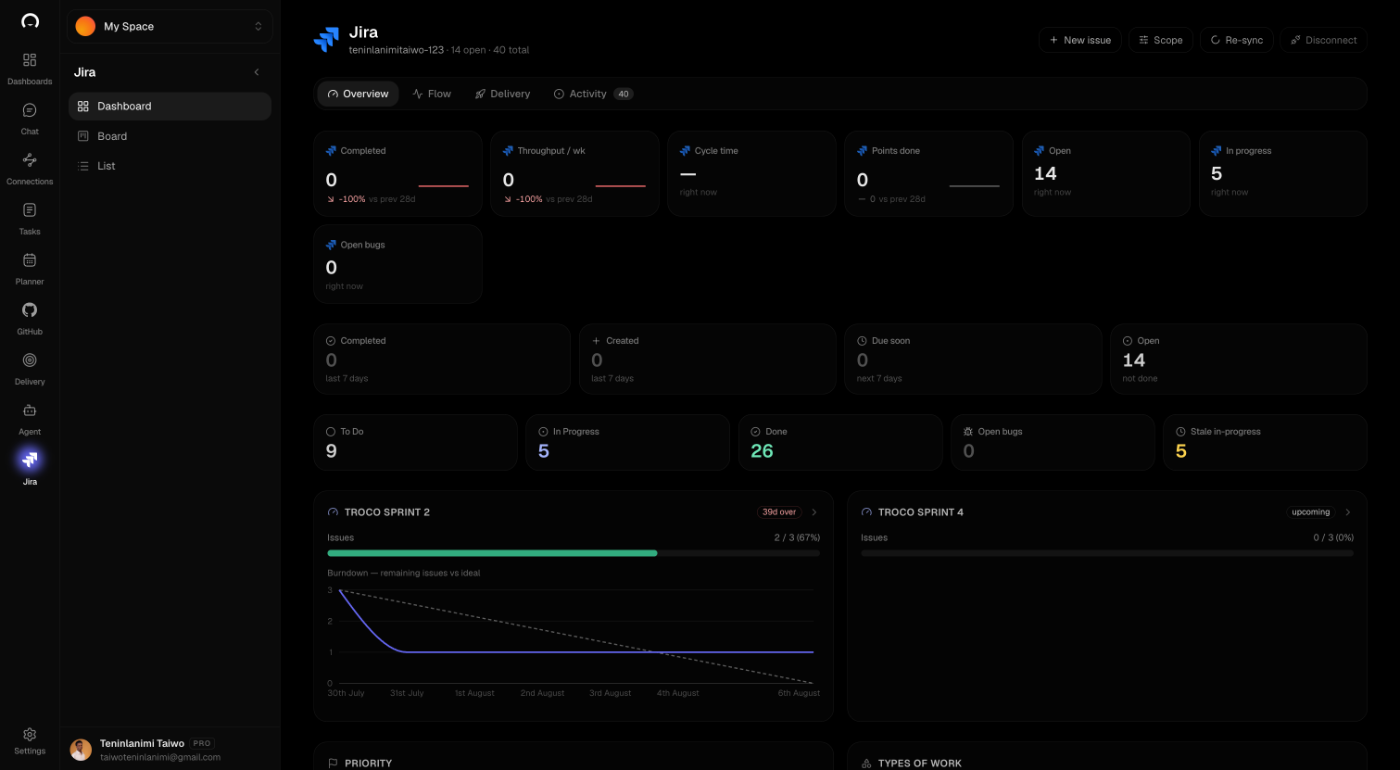
The connected project (14 open, 40 total) rendered as the metrics a lead actually reports on: completed, throughput, cycle time, points done, open bugs and stale in-progress work, with To Do / In Progress / Done counts beneath.
Sprints appear side by side: an active sprint 39 days over at 67% of issues, next to an upcoming one at 0%, each with a burndown of remaining issues against ideal.
Why it matters: “stale in-progress: 5” is a derived metric. Jira stores tickets; it doesn't tell you which ones have quietly stopped moving.
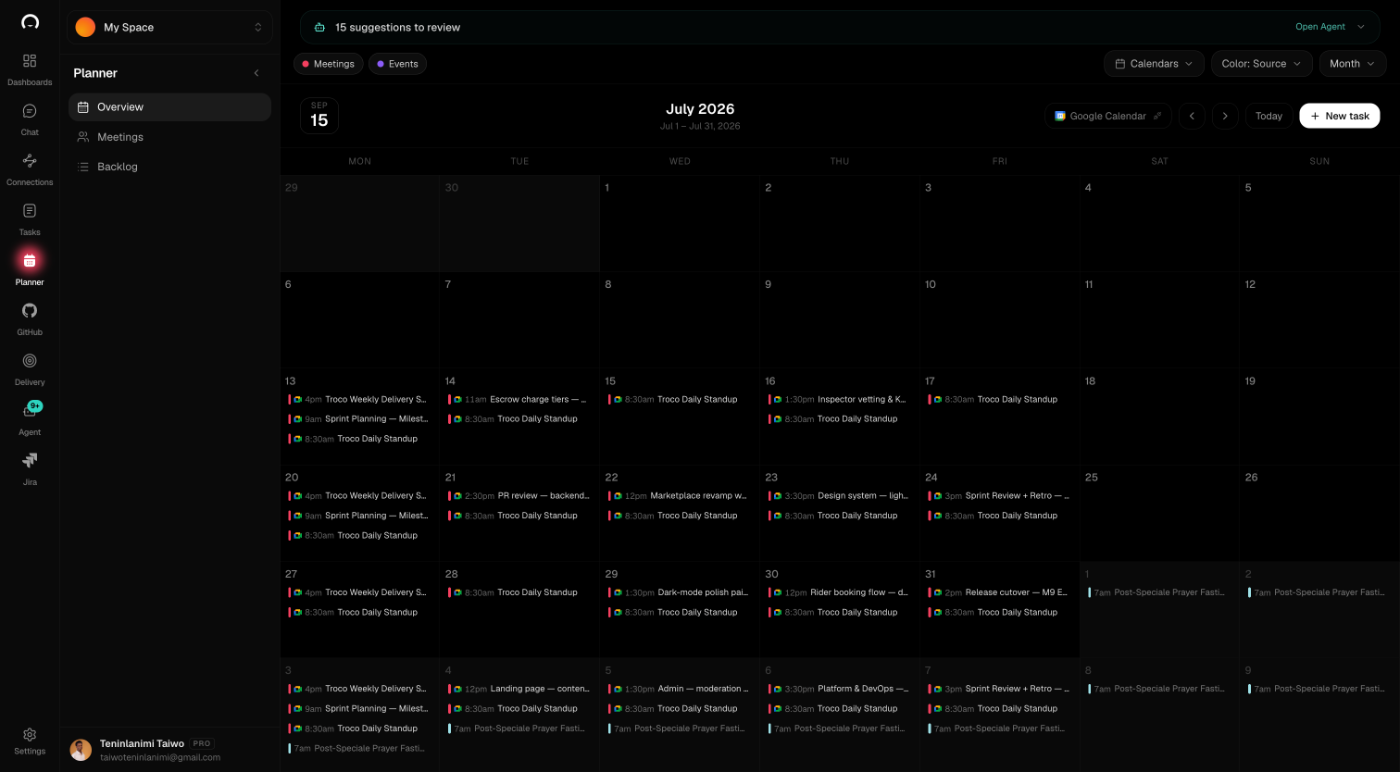
A month view synced two-way with Google Calendar: daily standups, sprint planning, PR reviews, design reviews, release cutovers and personal events, filterable by meetings versus events and colour-coded by source.
Top left: fifteen agent suggestions waiting for review. Khove proposes the blocks; the human still approves them.
Why it matters: this closes the loop. The agent can read the calendar in chat, forecast against it in Delivery, and write to it here. One permission model across all three.
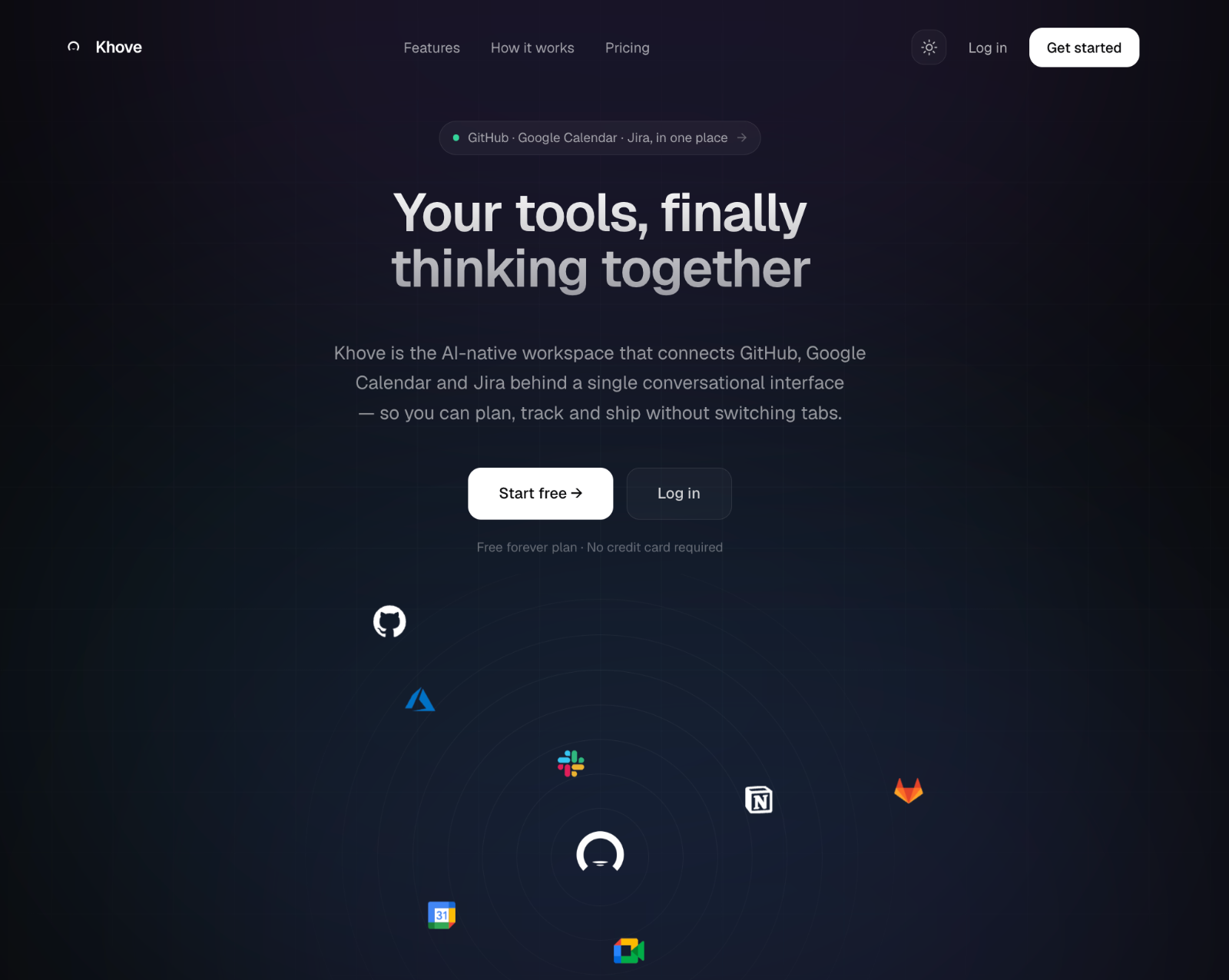
“Your tools, finally thinking together.” The hero makes a single promise and shows the integration constellation rather than a feature list: GitHub, Calendar, Jira, Slack, Notion, GitLab, Meet, Teams, Azure orbiting the mark.
Below it: free-forever plan, no credit card, and every integration free on every tier. Pricing charges for AI actions instead.
Why it matters: integration products die at the connect step. Charging for actions rather than connections removes that barrier deliberately.
